New York's OPWDD waiver program
Your guide to Home-Enabling Supports.
HES helps people with developmental disabilities live more independently at home, using technology, remote support, and 24/7 telehealth. Learn how the program works, find providers and technology, and plan next steps with free tools.

What HES funds
Three kinds of support.
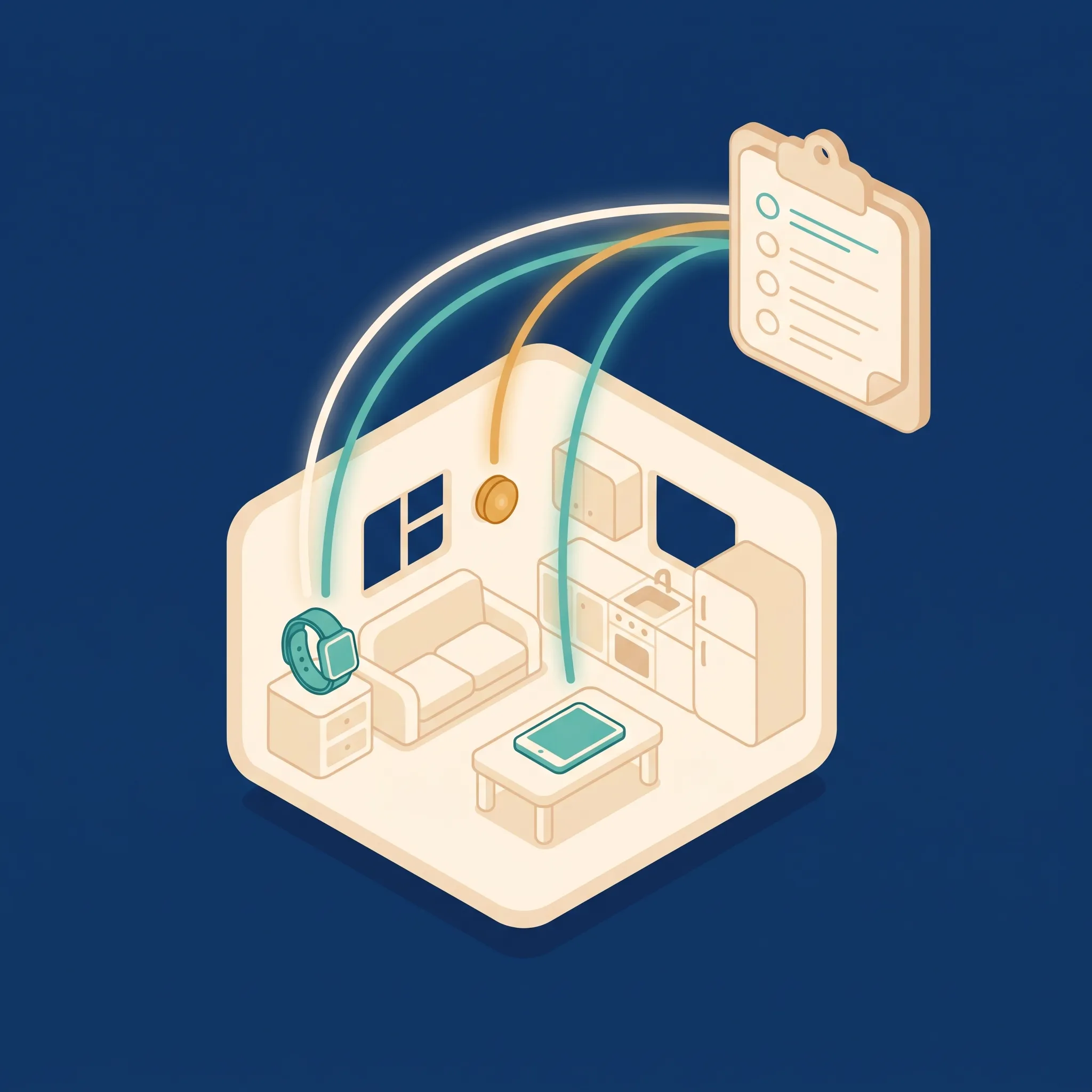
Smart-home technology, live remote support, and around-the-clock telehealth — a plan can use one or all three. How the funding works →
Assistive Technology
Equipment, sensors, wearables, and smart-home tech that help someone live more independently and safely at home.
- Smartwatches with fall or seizure detection
- Door, motion, water, or stove sensors
- Medication dispensers with reminders
- Adaptive mobility and positioning equipment
Remote Supports
Live, two-way, real-time supervision delivered off-site by trained staff — used to extend independence overnight or during specific high-risk windows.
- Off-site DSP who can see and speak to the person in their home
- Overnight monitoring as an alternative to a live-in staff
- On-demand virtual check-ins
Health Coordination
24/7 telemedicine and care coordination delivered by clinicians specifically trained in intellectual and developmental disability.
- Telehealth urgent care any hour of the day
- I/DD-trained behavioral health and psychiatric consultation
- Care coordination across providers and the family
Pick your starting point
Guides for your role.
Families, self-advocates, care managers, brokers, provider agencies, and HES agencies each have different jobs to do. Start with yours.
Families & guardians
What HES can pay for, how to raise it with the care manager, and what happens after approval.
Open this guide ForCare managers
Eligibility screening, Life Plan goal phrasing, and the pre-submission checks that keep authorizations moving.
Open this guide ForSelf-direction brokers
How HES draws on the PRA, what the managed service adds, and when it beats a direct purchase.
Open this guide ForSelf-advocates
What HES is, what you can ask for, and who to ask — in plain words.
Open this guide ForProvider agencies
Referral signals to watch for, scripts for raising HES, and how it fits alongside your services.
Open this guide ForHES agencies
How to use this site and the forthcoming HES Assessment tool as a reference for your own education, onboarding, and family conversations.
Open this guideTools
Two free tools, no sign-in.
The CCO Referral Worksheet is a 2-minute screener care managers and families can use today to decide whether HES is worth pursuing. The HES Assessment (coming soon) will rank technology options for a specific person based on their goals and living situation.
Last verified against OPWDD's official guidance and provider directory.